Posts

Showing posts with the label Platformer

Genesis REVIEWS Report: 20-11

Image
In this report of the top 20-11 Genesis games according to Retro Sanctuary , I have reviewed four games, all of which I enjoyed, with  Ecco: The Tides of Time  and  Beyond Oasis  proving to be quite nice surprises. Other than those games, all ten games, with the possible exception of  Pulseman,  deserve to be this high on the list, but  Sonic the Hedgehog 2  obviously should have been in the first game's place here. Surprisingly, this collection of ten games contains no Shmups, while having four Platformers. More surprisingly, seven games were published by Sega, which in hindsight is a clear indicator of the console's main weaknesses when compared to the dominant SNES. Regardless of these observations, this is still a solid list of games to play. Please enjoy my report:- 20- Sonic the Hedgehog (1992): Genre: Platformer. Publisher: Sega; Developer: Sega. Few games are as defined by their main competition as Sonic the Hedgehog . Here is a game that ...

Genesis REVIEWS: Sonic the Hedgehog 2:

Image
Without Sonic, there wouldn't have been a 16-bit console war. In a time when iconic cartoon characters managed the most sales, Sega needed the Blue Blur to compete. It needed Sonic to be both an iconic character, as well as have pretty solid gameplay about him. Since Sonic only started in 1991, Sega did not have the time to build him a legacy, as Nintendo did with Mario . Instead, they had to release the second game as fast as possible, culminating in the release of Sonic the Hedgehog 2 only a year after the first. It's good to say that, probably, a hectic schedule did not affect the quality of the game, because Sonic 2 is a continuation of the best parts of the first game, and then some. 61: Sonic the Hedgehog 2:- Year: 1992. Genre: Platformer. Publisher: Sega. Developer: Sega.  

Genesis REVIEWS: Sonic the Hedgehog

Image
Few games are as defined by their main competition as Sonic the Hedgehog . Here is a game that was not formed naturally, but deliberately designed to compete with Nintendo’s Mario and provide Sega with its own mascot to rally behind. Knowing that, Sega was not in a position to halfheartedly make any game, but needed a sure hit. This was going to be a game that could compete with the most iconic character in video games, and it needed to be something special. The result was the first Sonic the Hedgehog game, a complete opposite to Mario in design and philosophy, which nevertheless managed to convince people it was in the same league. Even if we now find that illusion to be far-fetched, Sega actually fooled a generation of people into thinking that it was huge. 20: Sonic the Hedgehog:- Year: 1992. Genre: Platformer. Publisher: Sega. Developer: Sega.  

Genesis REVIEWS: Decap Attack

Image
Right off the bat, the game makes a terrible impression. It starts with one of the loudest and most obnoxious sound effects I heard in video games. It only follows that up with more obnoxiousness in what seems an attempt to comment on B-Horror movies, just like Zombies Ate My Neighbor. When the game actually starts, it does manage to be interesting for a bit, but it could never shake off the bad first impression it had on me, until I formed an even worse impression. Decap Attack is more than a game that fails to be a B-Movie-inspired Platformer; it is a game that fails some basic gameplay principles. 98: Decap Attack: Year: 1991. Genre: Platformer. Publisher: Sega. Developer: Vic Tokai.

Saturn REVIEWS: Clockwork Knight 1 & 2

Image
Out of every 10 platformers on the SNES and the Genesis, only one was good, and it was most likely not made for the Genesis. Generally, playing any random platformer at that time that isn't made by Nintendo is a huge gamble with your time. The gulf in class between the great platformers we remember from that time and the rest of the filler games is as deep a the Grand Canyon. Both Clockwork Knight games are not at the rock bottom of that canyon (that spot is reserved for Bug! ), but they are deep enough for you not to waste your time playing them. R2: Clockwork Knight 1 & 2: Year: 1994 & 1995. Genre: Platformer. Publisher: Sega. Developer: Sega.

Saturn REVIEWS: Rayman

Image
Back in a time when every developer and their mother were chasing the latest trend in 3D graphics and blocky polygons, one small developer in France decided to go the other way. Instead of the latest in technology, they decided to go back to what worked in the past and make a 2D platformer that would have been impossible to make on earlier hardware. As such, Ubisoft got its first big hit with Rayman , which is a game that is as good now as when it was first released, ridiculing in the process the early adopters of 3D technology like the absolutely horrendous Bug! . 79: Rayman: Year: 1995. Genre: 2D Platformer. Publisher: Ubisoft. Developer: Ubi Pictures (Ubisoft).

Saturn REVIEWS: Pandemonium!

Image
Pandemonium! is yet another Crystal Dynamics platformer, but it is one of their least-known titles. Originally released on the PS1 in 1996, the game was overshadowed by Naughty Dog's Crash Bandicoot . It then went on to be ported nearly everywhere, with the Saturn getting probably the best version. It's one of the earliest 2.5D games in the market, and through some impressive innovation at the time, it provided solid 2D gameplay in a moving 3D world. 93: Pandemonium!: Year: 1997. Genre: Platformer. Publisher: Crystal Dynamics. Developer: Toys for Bob.

Saturn REVIEWS: Gex

Image
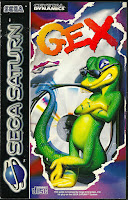
With the impending start of the fifth generation of videogame consoles, The 3DO Company wanted to revolutionize the console market with their new 3DO console. Of course, the 3DO Company realized they needed a mascot character to compete with Mario and Sonic, and Crystal Dynamics obliged that need with Gex. A green gecko mascot to rival Sega's blue and Nintendo's red. It can be surmised that the failure of the 3DO is then in part, a failure of Gex . Yet, that would be a very unfair conclusion. Even though Gex is as dead a mascot as he can be, his debut was not bad at all. In fact, it puts him square in the running for best failed mascot of the '90s. 97: Gex: Year: 1996. Genre: Platformer. Publisher: Crystal Dynamics. Developer: Crystal Dynamics, Beam Software.

Saturn REVIEWS: Bug!

Image
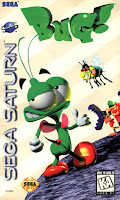
Sega obviously rushed the release of the Saturn. Hearing about Sony's upcoming console, they wanted to be first in the scene to try and imitate their early console advantage in the 16-bit era. Maybe that is why they didn't have their big guns ready at the start. Specially missing was their newly iconic mascot, Sonic the Hedgehog. Which is why Bug, the titular character of Bug! , was actually conceived and developed as a possible mascot for the Saturn. Both the character and the game were made to represent the capabilities of the new console. That was a big mistake. Chucking the entire thing into the ocean would have been a better demonstration. 100: Bug!: Year: 1995. Genre: Platformer. Publisher: Sega. Developer: Realtime Associates.

PS1 REVIEWS: Skullmonkeys

Image
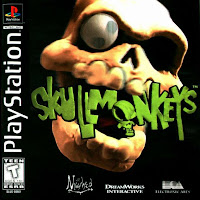
The onset of 3D graphics in the 5th generation led industry leaders in animation, such as DreamWorks, to gravitate towards making video games. Some of those games, like Skullmonkeys , were visual and graphical masterpieces that still hold up today. However, other than its brilliant clay aesthetic and animations, the game is not a particularly engaging platformer at all. You are probably better served watching many of the brilliant claymation movies of the 90s instead. #A47: Skullmonkeys:- Year: 1998. Genre: Platformer. Publisher: Electronic Arts. Developer: The Neverhood, Inc.

PS1 REVIEWS: Klonoa: Door to Phantomile

Image
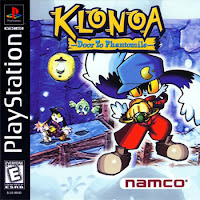
Klonoa is different from the other mascots introduced in the late 90s in that Namco balanced the edgy style of the era with a classical Japanese focus on cuteness and personality. That saved the character from being as dated and cringy as some of the other B-Tier mascots of the time. However, an arguably more drastic departure was Namco's insistence on remaining within the tried and true 2D Platformer genre instead of going for the 3D trend. That ultimately worked in the game's favor, as this is a really very good 2D platformer at its core, with the added bonus of having a nice story and some good graphics. #65: Klonoa: Door to Phantomile: Year: 1997, 1998. Genre: 2D Platformer. Publisher: Namco. Developer: Namco .